
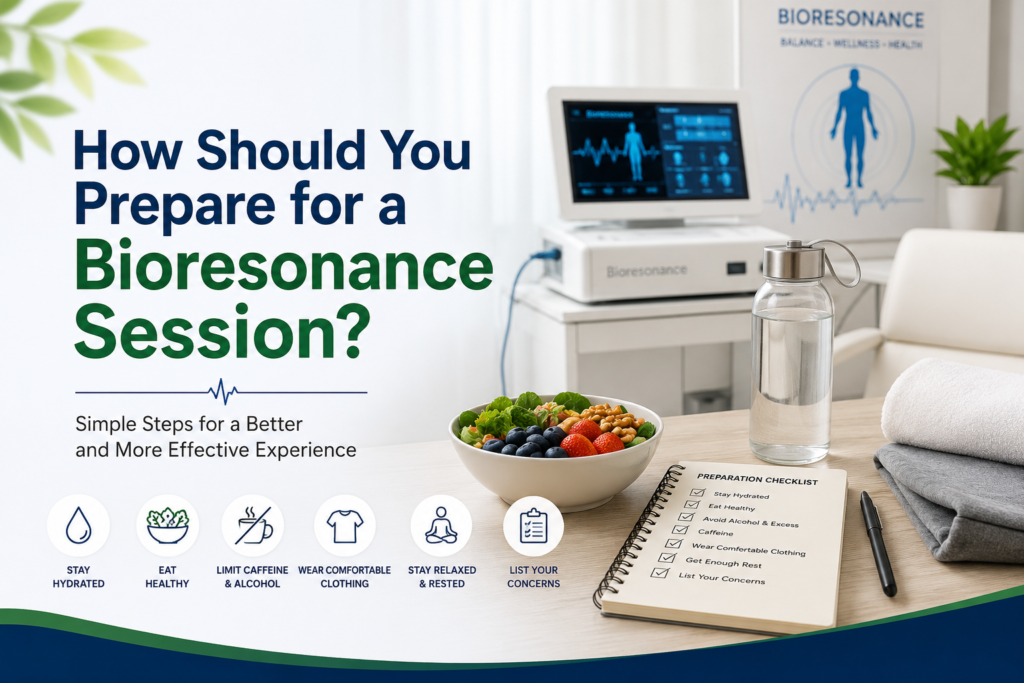
If you are considering a bioresonance session for the first time, you may be wondering how to prepare. Do you need to fast? Can you drink coffee? Should you bring anything with you? These are common questions, especially when you are not sure what to expect.
The good news is that preparing for a bioresonance session is generally simple. Most people do not need to make major changes to their normal routine. However, arriving comfortable, hydrated, relaxed, and ready to discuss your concerns can make your appointment easier and more organised.
In this guide, we explain how to prepare for a bioresonance session, what you should do before your appointment, the potential pros and limitations, and some frequently asked questions.
What Is a Bioresonance Session?
Bioresonance is a complementary and alternative wellness approach that uses specialised equipment to measure or work with electromagnetic signals associated with the body. The exact process can differ depending on the practitioner, equipment, and purpose of the session.
A session may begin with a conversation about your general wellbeing and the reasons you are seeking bioresonance. The practitioner may then carry out an assessment using their equipment and discuss their observations with you.
It is important to remember that bioresonance should not be considered a replacement for medical diagnosis or treatment. If you have persistent or concerning symptoms, consult a qualified healthcare professional.
How to Prepare for a Bioresonance Session
1. Stay Normally Hydrated
One of the simplest things you can do before an appointment is drink water normally throughout the day. You do not need to drink excessive amounts immediately before your session.
Arriving comfortably hydrated can also help you feel better during the appointment, particularly if you are travelling or waiting for some time before your session.
2. Eat Normally
Unless your practitioner specifically tells you to fast, there is usually no reason to arrive at your appointment extremely hungry.
Have your normal meals and avoid making sudden dietary changes just before your session. If your practitioner has given you specific instructions about food or fasting, follow those instructions instead.
3. Avoid Excessive Alcohol
It is sensible to avoid excessive alcohol before a bioresonance appointment. Alcohol can affect how you feel and may make it harder to remain comfortable and focused during the session.
Instead, try to arrive feeling refreshed and ready for your appointment.
4. Don’t Overdo Caffeine
You do not necessarily need to stop drinking coffee or tea before bioresonance testing. However, consuming much more caffeine than you normally would may leave you feeling restless or uncomfortable.
The simplest approach is to maintain your usual routine unless your practitioner recommends otherwise.
5. Wear Comfortable Clothing
Comfortable clothing can make your appointment more pleasant. Depending on the type of bioresonance equipment being used, your practitioner may provide specific instructions about clothing, jewellery, or other items.
If you are unsure, contact the provider before your appointment and ask what is recommended.
6. Write Down Your Concerns
Before your session, take a few minutes to think about why you booked the appointment. Writing down your main concerns can help you remember everything you want to discuss.
You might make a short list of:
- Your main wellness concerns
- When you first noticed them
- Recent lifestyle changes
- Questions about the session
- Supplements or medications you currently use
- Previous relevant reports or assessments
Having this information ready can make your conversation with the practitioner more organised.
7. Get Enough Rest
Try to get a normal night’s sleep before your appointment. You do not need to follow a special routine, but arriving extremely tired may make the experience less comfortable.
Give yourself enough time to travel to the clinic so you are not rushing immediately before the session.
8. Follow Your Practitioner’s Instructions
Every bioresonance provider may have slightly different procedures. Some may recommend specific preparation, while others may require very little.
Always follow the instructions given by the practitioner or clinic rather than assuming that every bioresonance session follows exactly the same process.
What Should You Avoid Before Bioresonance Testing?
There are no universal rules for every bioresonance appointment, but some simple precautions can help you feel more comfortable.
| Before Your Session | Recommendation |
|---|---|
| Drink water normally | Recommended |
| Eat your usual meals | Usually recommended |
| Wear comfortable clothing | Recommended |
| Get adequate rest | Recommended |
| Excessive alcohol | Best avoided |
| Excessive caffeine | Best avoided |
| Major dietary changes | Usually unnecessary |
| Stop prescribed medication | Do not do this without medical advice |
| Arrive in a rush | Best avoided |
The most important point is not to make unnecessary changes to your normal health routine simply because you have a bioresonance appointment.
Pros of Preparing for a Bioresonance Session
Good preparation does not guarantee a particular outcome, but it can make your overall experience easier.
| Potential Benefit | How It Helps |
|---|---|
| Better communication | You can explain your concerns clearly |
| Greater comfort | Being rested and hydrated may make the appointment easier |
| Less stress | Arriving early gives you time to relax |
| Better organisation | Written questions help you remember important points |
| Clear expectations | Understanding the process can reduce uncertainty |
Preparation is mainly about being comfortable and organised rather than trying to influence the results of the session.
Cons and Limitations to Consider
Before booking bioresonance, it is also important to understand its limitations.
Limited Scientific Evidence
Scientific evidence for many claims associated with bioresonance remains limited. Different practitioners may also make different claims about what their equipment can identify or address.
For this reason, be cautious of anyone promising that bioresonance can diagnose or cure serious medical conditions.
It Does Not Replace Medical Care
Bioresonance should not replace appropriate medical examinations, laboratory tests, medications, or treatments recommended by a qualified healthcare professional.
If you have worrying or persistent symptoms, seek appropriate medical advice rather than relying solely on a complementary approach.
Results May Be Interpreted Differently
The interpretation of a bioresonance assessment may depend on the equipment and practitioner. A bioresonance reading should not automatically be treated as a confirmed medical diagnosis.
Preparation Can Vary
There is no single preparation method that applies to every provider. Your practitioner may have their own instructions depending on the type of appointment.
What Happens During a Bioresonance Session?
A typical appointment may start with a discussion about your reasons for attending. Your practitioner may ask questions about your general wellbeing and lifestyle.
The assessment may then involve specialised bioresonance equipment. Depending on the provider, the practitioner may explain their observations during or after the assessment.
Before attending, it is useful to ask how long the appointment will take and whether you need to bring anything.
Frequently Asked Questions
Do I need to fast before a bioresonance session?
Usually, fasting is not automatically required. However, preparation can vary between providers, so check with your practitioner before the appointment.
Can I drink water before bioresonance testing?
Yes, you can generally drink water normally unless your practitioner gives you different instructions. Staying normally hydrated is a sensible approach.
Can I drink coffee before my appointment?
Most people do not need to completely avoid coffee. However, it is better to avoid consuming unusually large amounts of caffeine before your session.
Should I stop taking medication?
No. Never stop or change prescribed medication simply because you are attending a bioresonance session. Discuss medication changes with your healthcare professional.
What should I wear?
Comfortable clothing is generally a good choice. Your practitioner may provide additional instructions depending on the equipment used.
Final Thoughts
Preparing for a bioresonance session is usually straightforward. Stay normally hydrated, eat according to your usual routine unless instructed otherwise, wear comfortable clothing, get enough rest, and write down any questions or concerns you want to discuss.
Most importantly, keep realistic expectations. Bioresonance is a complementary wellness approach, and scientific evidence supporting many of its proposed uses is limited. It should not replace professional medical diagnosis or treatment.
If you are considering bioresonance, ask questions, understand what the session involves, and make decisions based on reliable information and appropriate professional advice. For more visit our website Advanced bio resonance