Bioresonance therapy is a complementary wellness approach that has attracted growing interest among people looking for non-invasive ways to support their wellbeing. In the UK, clients may come across bioresonance practitioners offering sessions designed around individual concerns, lifestyle factors and overall wellbeing.
But how does bioresonance therapy actually work? What happens during a session, and what should you expect if you are considering trying it?
This guide explains the basic principles behind bioresonance therapy, what a typical session may involve, and some important points UK clients should understand before booking an appointment.
What Is Bioresonance Therapy?
Bioresonance therapy is a complementary approach based on the idea that the body produces electromagnetic signals or frequencies. Practitioners who use bioresonance equipment propose that these signals can be assessed and, depending on the particular system, used as part of a personalised wellness session.
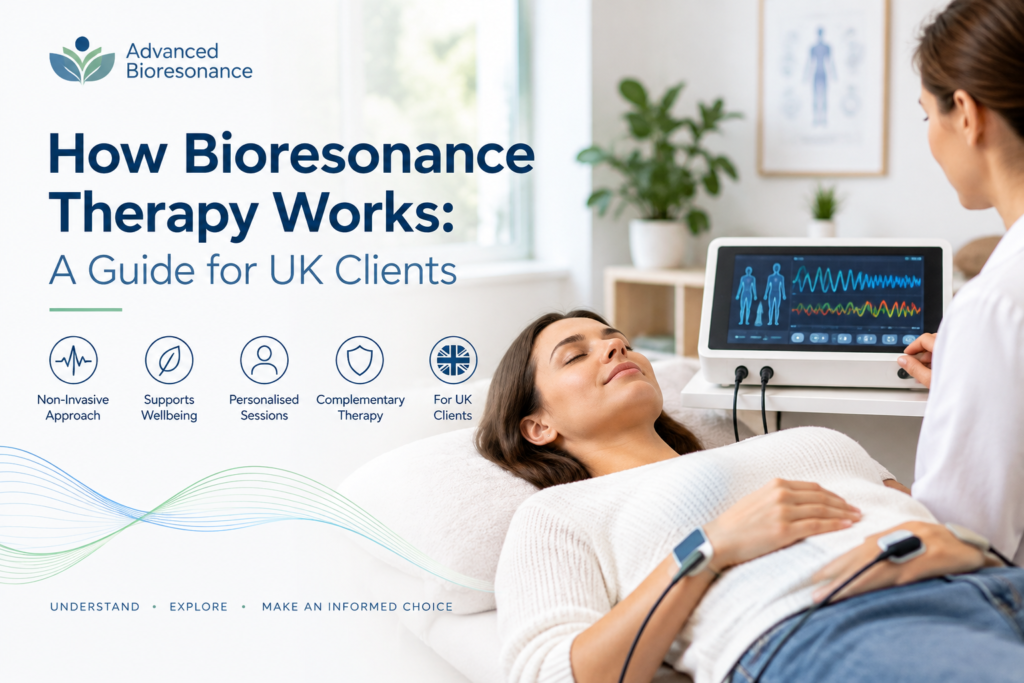
The approach is generally non-invasive. Unlike surgery or conventional procedures that involve needles or medication, a bioresonance session may involve sitting or lying comfortably while using a specialist device.
It is important to understand that the theories and claims surrounding bioresonance vary considerably between practitioners and devices. Bioresonance should therefore be considered a complementary approach rather than a replacement for diagnosis or treatment provided by a qualified medical professional.
How Does Bioresonance Therapy Work?
The exact process depends on the practitioner and the equipment being used.
In general, bioresonance therapy is based on the concept that different tissues or substances may have different electromagnetic characteristics. A bioresonance device is then used to interact with or measure signals according to the manufacturer’s system.
During a session, sensors, electrodes or other equipment may be used. The practitioner may then use the information produced by the device as part of a wider discussion about the client’s wellbeing.
Some practitioners describe the process as identifying areas that may be under stress and then applying specific frequencies as part of the session.
However, it is important to separate the proposed mechanism from established medical evidence. Research into bioelectromagnetic and related therapies is ongoing, and evidence varies substantially according to the specific technology, condition and outcome being studied. A 2026 systematic review of BEMER therapy for musculoskeletal pain, for example, found that the available randomised trials did not establish an effect beyond sham treatment and called for better-quality research.
What Happens During a Bioresonance Session?
A typical appointment may begin with a consultation.
Your practitioner may ask about your general wellbeing, lifestyle, current concerns and what you hope to achieve from the session. This conversation can be useful because it gives the practitioner an understanding of your individual circumstances.
Depending on the equipment being used, sensors or electrodes may then be placed on or held by the client.
The practitioner operates the equipment according to the system being used. Sessions can vary significantly between clinics, so it is worth asking beforehand what the appointment involves.
A typical session may include:
| Stage | What may happen |
|---|---|
| Initial consultation | Discuss your wellbeing and reasons for booking |
| Assessment | Practitioner may use the equipment according to their method |
| Bioresonance session | Sensors or electrodes may be used with specialist equipment |
| Discussion | Practitioner may discuss observations and general wellbeing |
| Follow-up | Further sessions may be suggested depending on the practitioner |
The exact process should always be explained to you before treatment begins.
Is Bioresonance Therapy Painful?
Bioresonance sessions are generally described by practitioners as non-invasive and comfortable. There are normally no injections or surgical procedures involved.
However, experiences can differ depending on the equipment and the type of session.
If you have concerns about discomfort, electrical stimulation, medical devices or an existing health condition, tell the practitioner before your appointment.
The NHS advises people to tell complementary therapy practitioners about medical conditions, medicines and other treatments because not every complementary therapy is suitable for everyone.
What Can Bioresonance Therapy Be Used For?
You may see bioresonance services advertised in connection with a wide range of wellbeing concerns. These can include general relaxation, lifestyle support and various symptoms.
However, marketing claims should not automatically be interpreted as medically proven benefits.
This distinction is particularly important when bioresonance is presented as a diagnostic test.
For example, the British Society for Allergy and Clinical Immunology has stated that certain alternative testing methods, including hair analysis described as bio-resonance testing, do not have robust evidence for diagnosing food allergies.
Therefore, if you are concerned about an allergy, chronic symptom or medical condition, you should seek appropriate medical assessment rather than relying on bioresonance as a replacement for conventional diagnosis.
Bioresonance Therapy vs Conventional Medical Care
Bioresonance and conventional healthcare are different approaches.
Conventional medicine uses established diagnostic procedures, clinical guidelines, laboratory tests, imaging and treatments supported by varying levels of scientific evidence.
Bioresonance is generally positioned as a complementary wellness approach.
| Bioresonance approach | Conventional healthcare |
|---|---|
| Complementary approach | Mainstream medical care |
| Usually non-invasive | May involve medicines, procedures or diagnostic tests |
| Often personalised around wellbeing | Diagnosis based on clinical assessment and evidence |
| Evidence varies by technology and claim | Treatments are generally evaluated through clinical research |
| Should not replace medical diagnosis | Used for diagnosis and treatment of medical conditions |
The NHS notes that complementary therapies are not tested in exactly the same way as standard medicines, and that the evidence supporting different complementary approaches varies.
What Should UK Clients Ask Before Booking?
If you are considering bioresonance therapy in the UK, asking a few questions before your appointment can help you understand exactly what you are paying for.
Consider asking:
- What does the session involve?
- What type of bioresonance equipment do you use?
- How long does a session normally take?
- What qualifications or training does the practitioner have?
- What can I realistically expect from the session?
- Is the service intended as complementary wellbeing support?
- What happens if I have an existing medical condition?
- Should I continue my current medical treatment?
- What are the costs of follow-up sessions?
- Are there any situations where you would recommend speaking to my GP first?
A reputable practitioner should be comfortable explaining their approach without suggesting that you stop prescribed medication or avoid appropriate medical care.
How Long Does Bioresonance Therapy Take?
The length of a bioresonance appointment can vary depending on the practitioner, equipment and purpose of the session.
Some appointments may include a longer initial consultation followed by the session itself, while follow-up appointments may be shorter.
Instead of choosing a practitioner based only on session length, look at the complete service: consultation, explanation, aftercare and transparency about what the therapy can and cannot establish.
How Many Bioresonance Sessions Might You Need?
There is no universally established number of bioresonance sessions that applies to every person.
A practitioner may recommend a programme based on your individual circumstances, but clients should be cautious about guarantees of specific outcomes.
The number of sessions, frequency and cost should be clearly explained before you commit to a package.
It can also be useful to agree on what you will use to decide whether continuing sessions is worthwhile.
Is Bioresonance Therapy Scientifically Proven?
This is one of the most important questions for anyone researching bioresonance therapy.
The answer depends on the specific technology and the health outcome being investigated. Research exists into bioelectromagnetic and related complementary therapies, but findings are not consistent enough to treat all bioresonance claims as established medical facts.
For example, a recent systematic review of BEMER, a specific form of electromagnetic therapy, examined randomised controlled trials for musculoskeletal pain. The researchers reported that only one of four sham-controlled studies found BEMER superior to sham treatment and concluded that the evidence did not currently demonstrate effectiveness beyond sham treatment.
This illustrates why clients should look at evidence for the specific therapy, device and condition, rather than assuming that research into one form of electromagnetic therapy proves all bioresonance treatments work in the same way.
Is Bioresonance Safe?
Because bioresonance services differ, safety should be considered on an individual basis.
Before a session, tell your practitioner about:
- Existing medical conditions
- Prescription medicines
- Medical devices
- Pregnancy, where relevant
- Current medical treatment
- Any symptoms that have recently changed
Most importantly, do not use bioresonance to delay assessment of potentially serious symptoms.
If you have persistent, severe or unexplained symptoms, contact an appropriate healthcare professional.
Bioresonance Therapy in the UK: What Clients Should Expect
A responsible approach to complementary therapy should involve clear communication.
You should know what the session involves, how much it costs and what claims the practitioner is making about the service.
You should also be able to make your own decision without being pressured into purchasing a large package of sessions.
The NHS highlights the importance of considering safety and suitability when using complementary therapies.
For medical conditions, conventional healthcare should remain an important part of your care. Bioresonance may be considered by some people as a complementary wellness option, but it should not be presented as a substitute for appropriate medical diagnosis or treatment.
Frequently Asked Questions About Bioresonance Therapy
What is bioresonance therapy?
Bioresonance therapy is a complementary approach that uses specialist equipment based on theories involving electromagnetic signals or frequencies associated with the body. Different practitioners and devices use different methods.
Does bioresonance therapy hurt?
Bioresonance sessions are generally non-invasive, and practitioners commonly describe them as comfortable. However, the experience depends on the equipment and method being used.
How long does a bioresonance session take?
Session length varies between practitioners. Your initial appointment may take longer because it can include a consultation and discussion of your wellbeing.
Can bioresonance diagnose medical conditions?
Bioresonance should not be relied upon as a replacement for established medical diagnostic methods. In particular, BSACI states that certain alternative testing methods marketed as bio-resonance testing lack robust evidence for diagnosing food allergies.
Can I use bioresonance alongside conventional healthcare?
Some people choose complementary therapies alongside conventional healthcare. However, tell both your healthcare professional and practitioner about treatments you are receiving, particularly if you have a medical condition or take medication.
Is bioresonance available in the UK?
Yes, complementary therapy practitioners offering bioresonance services can be found in different parts of the UK. When choosing a practitioner, check their training, experience, approach, pricing and the claims they make about their services.
Final Thoughts
Bioresonance therapy UK is an area of complementary health that continues to attract interest from people looking for non-invasive wellness approaches. Understanding how the therapy is proposed to work, what a session involves and what the available evidence actually shows can help you make an informed decision.
For UK clients, the most important point is to approach bioresonance with realistic expectations. Ask questions, understand the service you are booking and be cautious about claims that a complementary therapy can diagnose or treat medical conditions without appropriate clinical evidence.
If you are considering bioresonance therapy for a specific health concern, discuss that concern with an appropriate healthcare professional and consider bioresonance only as a complementary option where it is suitable for you. For more visit our facebook and instagram page.