When it comes to taking care of your health, there are many ways to gain insight into your overall wellbeing. Traditional health screening has long been the foundation of modern healthcare, while bioresonance has emerged as a complementary wellness approach that focuses on the body’s energetic responses. Although these methods differ significantly, understanding their purpose can help you make informed decisions about your health.
In this article, we’ll explore the differences between bioresonance and traditional health screening, how each approach works, and how they may complement one another.
What Is Traditional Health Screening?
Traditional health screening involves medical tests and examinations performed by qualified healthcare professionals to identify potential health conditions, monitor existing diseases, or evaluate overall health.
Common examples include:
- Blood tests
- Urine analysis
- Blood pressure measurements
- Cholesterol testing
- X-rays and MRI scans
- Ultrasounds
- ECG (Electrocardiogram)
- Diabetes screening
- Cancer screening
These tests are based on established medical science and are used to diagnose, monitor, and guide treatment for various health conditions.
Benefits of Traditional Health Screening
Traditional screening offers several advantages:
- Detects diseases in their early stages.
- Provides measurable clinical data.
- Supports accurate medical diagnosis.
- Helps doctors recommend appropriate treatments.
- Monitors chronic conditions over time.
- Backed by extensive scientific research and clinical guidelines.
Regular health screenings remain one of the most effective ways to protect your long-term health.
What Is Bioresonance?
Bioresonance is a complementary wellness approach that uses specialized devices to assess the body’s energetic responses. Practitioners believe that every cell, organ, and tissue produces natural electromagnetic signals, and changes in these signals may provide additional insights into overall wellbeing.
Rather than diagnosing medical conditions, bioresonance aims to support a holistic understanding of the body’s energy balance and wellness status.
At Advanced Bioresonance, scans are designed to provide wellness information that can help individuals make informed lifestyle choices alongside professional medical care.
How Does Bioresonance Work?
During a bioresonance session, sensors are placed on the hands, feet, or other contact points depending on the equipment used. The device records energetic responses and analyzes frequency patterns.
After the scan, your practitioner reviews the findings and discusses areas where lifestyle improvements such as nutrition, hydration, stress management, sleep, and overall wellness habits may be beneficial.
The process is:
- Comfortable and non-invasive
- No needles or blood samples
- Typically painless
- Usually completed within 30–60 minutes
- Focused on wellness rather than medical diagnosis
Key Differences Between Bioresonance and Traditional Health Screening
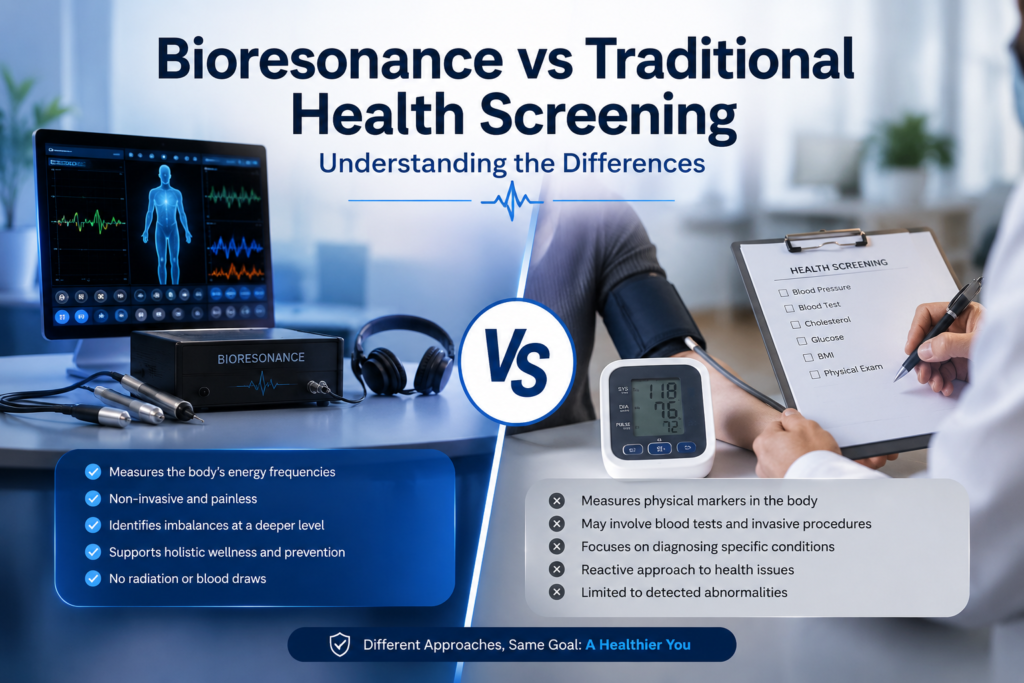
| Traditional Health Screening | Bioresonance |
|---|---|
| Uses laboratory tests and medical imaging | Uses frequency-based wellness technology |
| Diagnoses medical conditions | Provides wellness-focused information |
| Conducted by medical professionals | Performed by trained bioresonance practitioners |
| Uses measurable biological markers | Assesses energetic responses |
| Used to prescribe treatments | Supports lifestyle and wellness discussions |
| Evidence-based diagnostic method | Complementary wellness approach |
Can They Work Together?
Yes. Many people choose bioresonance as part of a broader wellness routine while continuing to receive regular medical care.
Traditional healthcare remains essential for:
- Diagnosing illnesses
- Emergency care
- Prescribing medications
- Surgery
- Managing chronic diseases
- Preventive medical screening
Bioresonance may complement these services by encouraging individuals to pay closer attention to lifestyle factors such as:
- Nutrition
- Hydration
- Stress management
- Sleep quality
- Physical activity
- General wellbeing
It should not be viewed as a replacement for professional medical advice, diagnosis, or treatment.
Who May Consider Bioresonance?
People interested in holistic wellness often explore bioresonance as part of their health journey. It may appeal to individuals who wish to:
- Learn more about their overall wellness.
- Gain insights into lifestyle habits.
- Support stress management.
- Improve their daily wellbeing routine.
- Complement their existing healthcare plan.
Anyone experiencing symptoms, concerns about their health, or ongoing medical conditions should consult a qualified healthcare professional.
Why Regular Medical Check-Ups Still Matter
Even if you choose complementary wellness services, regular visits to your doctor remain important.
Routine medical check-ups can help detect conditions such as:
- High blood pressure
- Diabetes
- Heart disease
- Certain cancers
- Kidney disease
- High cholesterol
Early detection often leads to better health outcomes and more effective treatment.
Frequently Asked Questions
Is bioresonance a medical test?
No. Bioresonance is considered a complementary wellness approach and is not intended to diagnose, treat, cure, or prevent diseases.
Can bioresonance replace blood tests or medical examinations?
No. Traditional medical tests remain the standard for diagnosing health conditions. Bioresonance should be used alongside—not instead of—professional medical care.
Is bioresonance painful?
No. A bioresonance session is generally non-invasive and painless, with no needles or blood samples involved.
Who should have regular health screenings?
Everyone should follow the screening recommendations provided by their healthcare professional based on factors such as age, family history, and overall health.
Final Thoughts
Both traditional health screening and bioresonance serve different purposes. Traditional medical screening provides clinically validated information that healthcare professionals use to diagnose and manage health conditions. Bioresonance, on the other hand, is a complementary wellness tool that focuses on energetic responses and encourages a holistic approach to wellbeing.
Rather than choosing one over the other, many people find value in combining healthy lifestyle habits, regular medical check-ups, and complementary wellness practices to support their overall health. for more visit our website Advancedbioresonance
Disclaimer: The information in this article is provided for educational purposes only. Bioresonance is a complementary wellness approach and is not intended to diagnose, treat, cure, or prevent any disease. Always seek advice from a qualified healthcare professional regarding any medical concerns or before making decisions about your health.