
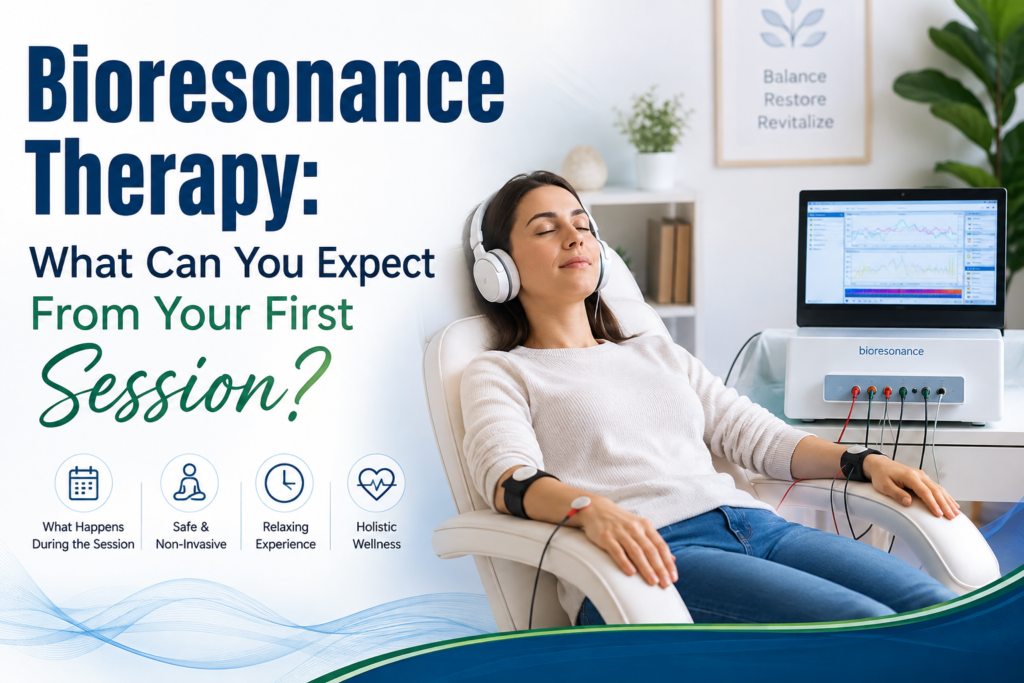
If you have recently heard about bioresonance therapy and are considering booking your first session, you may have questions about what actually happens during an appointment.
Is bioresonance therapy comfortable? How long does a session take? What should you bring? Will you need to prepare beforehand?
Knowing what to expect can make your first experience more comfortable and help you approach the session with realistic expectations.
In this guide, we explain what you can generally expect from a bioresonance therapy session, from the initial consultation through to the end of the appointment.
What Is Bioresonance Therapy?
Bioresonance therapy is a complementary wellness approach that uses specialised devices to measure or work with signals or frequencies associated with the body.
Practitioners may describe bioresonance in terms of the body’s energetic or electromagnetic patterns. Different practitioners and devices can use different methods, so it is important to ask your practitioner exactly what their equipment is designed to do.
It is also important to understand that bioresonance should not be viewed as a replacement for medical diagnosis or treatment. Current UK guidance notes that there is not sufficient robust clinical evidence to support claims that bioresonance devices can diagnose, prevent, or treat disease.
For this reason, a responsible bioresonance practice should present sessions as complementary and avoid encouraging clients to stop prescribed medical care.
What Happens During Your First Bioresonance Session?
Your first appointment may be slightly different depending on the practitioner, equipment and type of session. However, many appointments follow a similar general structure.
1. Initial Consultation
Your session will usually begin with a conversation about why you have booked an appointment.
The practitioner may ask about your general wellbeing, lifestyle, goals and what you would like to explore during the session.
This is a good opportunity to explain any questions or concerns you have.
You should also tell the practitioner about any relevant medical treatment you are currently receiving. Complementary therapies should not be used as a reason to delay or replace appropriate medical care.
2. Explanation of the Bioresonance Process
Before starting, the practitioner should explain how the session works and what equipment will be used.
If you are unfamiliar with bioresonance, don’t be afraid to ask questions such as:
- What does the equipment measure?
- How long will the session take?
- What will I experience during the session?
- What information will I receive afterwards?
- Is this a wellness assessment or a medical diagnostic test?
A good practitioner should be happy to explain the process clearly.
3. The Bioresonance Assessment
Depending on the equipment being used, the practitioner may connect you to the device using sensors, hand or foot electrodes, headphones, or another type of contact.
The exact process varies between systems.
Some practitioners describe this stage as assessing patterns or frequencies associated with the body. However, claims that bioresonance can diagnose specific medical conditions require appropriate clinical evidence, and UK advertising guidance currently states that such evidence has not been established for bioresonance devices.
Therefore, any information provided during a session should be considered in the appropriate context rather than treated as a substitute for a medical diagnosis.
Does Bioresonance Therapy Hurt?
For many people, the attraction of a bioresonance session is that the process is generally described as gentle and non-invasive.
You typically remain seated or relaxed while the practitioner operates the equipment.
However, your experience can vary depending on the equipment and type of session being provided.
If anything feels uncomfortable or you are unsure about what is happening, tell your practitioner immediately.
How Long Does a Bioresonance Session Take?
There is no single standard length for every bioresonance appointment.
A first session may take longer than a follow-up appointment because it can include an initial consultation and an explanation of the process.
Before booking, ask the practitioner:
“How long should I allow for my first bioresonance session?”
This will help you plan your appointment without making assumptions about the duration.
Do You Need to Prepare for Your First Session?
In many cases, your practitioner will provide any specific instructions before your appointment.
If you have not received instructions, you can ask whether you should:
- Eat normally before your appointment
- Drink water beforehand
- Avoid particular products or activities
- Wear comfortable clothing
- Bring information about current medications or treatments
- Bring previous medical information if specifically requested
Most importantly, be honest with your practitioner about your health history and any treatment you are receiving.
What Should You Wear?
Comfortable clothing is generally a sensible choice for a wellness appointment.
Depending on the equipment and assessment method, your practitioner may give you specific instructions about clothing, footwear or accessories.
If you are unsure, simply ask before your appointment.
What Might You Experience During a Session?
Everyone’s experience can be different.
Some people may simply sit comfortably while the practitioner operates the equipment. You may notice the equipment being connected to sensors or other components, while the practitioner explains what they are doing.
Because there is no universally established clinical protocol for bioresonance therapy, the exact experience can differ significantly between practitioners and devices.
It is therefore useful to ask your practitioner what you should expect before the session begins.
What Happens After a Bioresonance Session?
At the end of your appointment, your practitioner may discuss the session with you and explain any observations or wellness information they recorded.
This is a good time to ask questions.
You might ask:
- What did you observe during the session?
- What does the information mean?
- Is this information medically diagnostic?
- Are there any lifestyle recommendations?
- Should I discuss anything with my doctor?
- When would a follow-up appointment be appropriate?
Be cautious about making major health decisions based solely on information from a complementary therapy session.
If you have symptoms that concern you, or if you have been diagnosed with a medical condition, speak with an appropriately qualified healthcare professional.
Is Bioresonance Therapy Safe?
Safety depends partly on how the therapy is provided and whether it is being used responsibly.
A practitioner should not encourage you to stop prescribed medication, avoid medical treatment, or use bioresonance as a replacement for necessary healthcare.
The UK’s Advertising Standards Authority advises that marketers should not discourage essential medical treatment and that claims relating to the diagnosis or treatment of medical conditions need appropriate evidence.
If you are receiving treatment for a serious condition, discuss complementary therapies with your healthcare professional before starting them.
Bioresonance Therapy and Conventional Healthcare
Bioresonance therapy is best approached as a complementary wellness option rather than an alternative to appropriate medical care.
For example, if you have persistent symptoms, a new health concern or a suspected medical condition, your first step should be to seek advice from a qualified healthcare professional.
Complementary wellness services should work alongside responsible healthcare rather than replace it.
This distinction is particularly important because evidence for bioresonance varies, and current regulatory guidance does not support broad claims that bioresonance devices can diagnose or treat diseases.
Questions to Ask Before Your First Bioresonance Session
If you are considering booking an appointment, asking a few questions beforehand can help you choose a responsible practitioner.
Consider asking:
What type of bioresonance equipment do you use?
Different systems can work in different ways, so ask the practitioner to explain the equipment and its intended purpose.
How does the session work?
Ask for a simple explanation of what will happen from beginning to end.
How long will my appointment take?
Knowing the approximate duration can help you prepare.
What information will I receive?
Find out whether the session provides general wellness information or claims to provide a medical diagnosis.
Can I continue my existing medical treatment?
A responsible complementary therapy provider should not advise you to stop essential medical treatment without appropriate professional oversight.
Is Bioresonance Right for You?
Whether you decide to try bioresonance therapy is a personal choice.
The most important thing is to have realistic expectations and understand what the service can and cannot provide.
Look for a practitioner who:
- Explains the process clearly
- Answers your questions openly
- Avoids exaggerated medical claims
- Respects conventional healthcare
- Does not ask you to stop prescribed treatment
- Is transparent about the limitations of the service
A responsible approach allows you to explore complementary wellness options while continuing to make informed healthcare decisions.
Final Thoughts
Your first bioresonance therapy session should begin with a clear explanation of the process, followed by an assessment using the practitioner’s chosen equipment and a discussion of your experience afterwards.
The exact process, duration and equipment can vary between practitioners, so asking questions before your appointment is always worthwhile.
Most importantly, approach bioresonance with an open but informed mind. Bioresonance is a complementary approach, and current evidence does not establish it as a replacement for conventional medical diagnosis or treatment.
If you are experiencing persistent or concerning symptoms, seek advice from a qualified healthcare professional rather than relying on a complementary therapy alone.
Frequently Asked Questions
What happens during a first bioresonance therapy session?
A first session commonly begins with a consultation, followed by an explanation of the equipment and the bioresonance process. The practitioner may then carry out an assessment using sensors or other equipment before discussing the session with you.
How long is a bioresonance session?
There is no universal session length. First appointments may take longer because they can include an initial consultation and explanation of the process.
Is bioresonance therapy painful?
Bioresonance sessions are generally presented as gentle and non-invasive, but the exact experience depends on the equipment and practitioner.
Do I need to prepare before bioresonance therapy?
Preparation varies. Your practitioner should tell you if there are any specific instructions. Comfortable clothing and information about relevant current treatments may be useful.
Can bioresonance replace medical treatment?
No. Bioresonance should not be used as a substitute for appropriate medical diagnosis or treatment. Current UK guidance does not support claims that bioresonance devices can diagnose or treat disease.
Should I tell my doctor about complementary therapy?
If you have an existing medical condition or are receiving treatment, it is sensible to discuss complementary therapies with your healthcare professional. This is particularly important when dealing with serious conditions or treatments that require medical supervision.