When people are looking for answers about their health, they may come across different types of testing and assessment. Two approaches that sometimes get compared are bioresonance therapy and conventional medical testing. While both may be discussed in relation to understanding the body, they are very different in how they work, what they are designed to do, and how their results should be interpreted.
If you are considering bioresonance therapy in the UK, understanding this difference can help you make a more informed decision about your options.
What Is Conventional Medical Testing?
Conventional testing refers to the diagnostic methods commonly used within mainstream healthcare. These tests are usually based on established medical and scientific methods and may be recommended by a GP, doctor, or other qualified healthcare professional.
Depending on your symptoms or concerns, conventional testing may include blood tests, urine tests, X-rays, ultrasound scans, MRI scans, CT scans, allergy testing, or other investigations.
For example, a blood test can provide information about certain substances and markers in the blood. Imaging tests can allow healthcare professionals to look at structures inside the body.
The main purpose of conventional medical testing is to help healthcare professionals investigate symptoms, identify or rule out certain conditions, and make appropriate clinical decisions.
What Is Bioresonance Therapy?
Bioresonance therapy is a complementary approach that is based on the idea that the body produces measurable electromagnetic signals or frequencies. Practitioners use specialised equipment as part of a bioresonance session.
Unlike conventional diagnostic testing, bioresonance is generally offered as a complementary wellness approach rather than a replacement for medical diagnosis.
People may choose bioresonance because they are interested in a different way of exploring their overall wellbeing or want to complement the healthcare they are already receiving.
It is important to understand that bioresonance should not be used as a substitute for a medical examination, diagnosis, or treatment provided by a qualified healthcare professional.
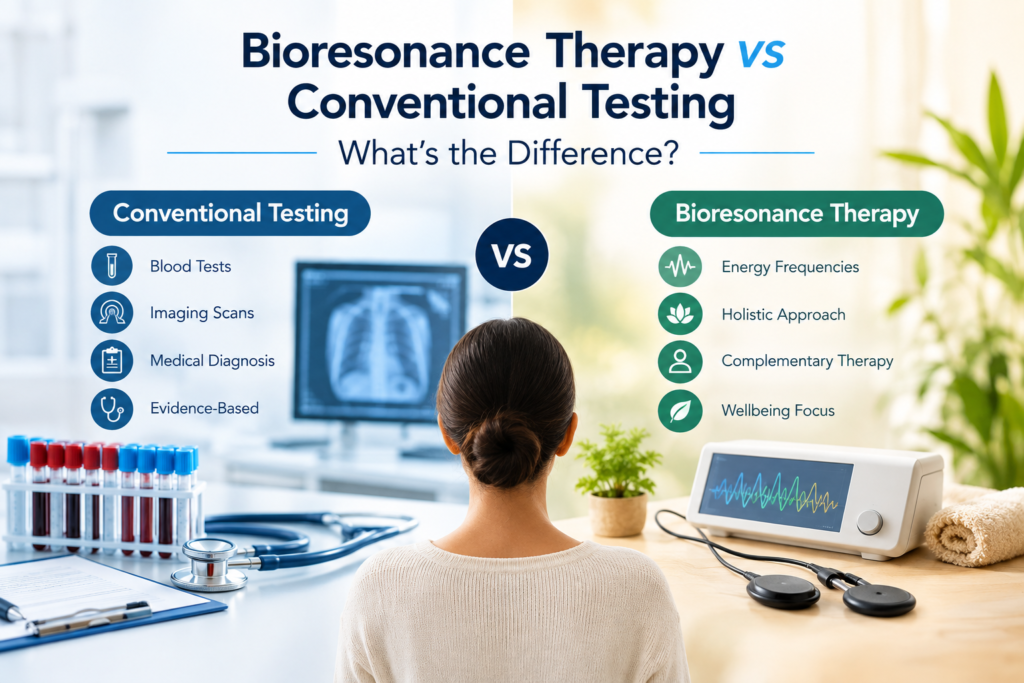
Bioresonance Therapy vs Conventional Testing
The biggest difference between these two approaches is their purpose.
Conventional medical testing is used within mainstream healthcare to investigate specific health concerns using established diagnostic methods. Results are interpreted by appropriately trained healthcare professionals alongside symptoms, medical history, physical examinations, and other relevant information.
Bioresonance therapy, on the other hand, is generally positioned within complementary and holistic wellness. A practitioner may use bioresonance equipment during a session as part of their approach to assessing or supporting wellbeing.
Another important difference is the evidence behind the methods. Many conventional diagnostic tests have been extensively studied and are routinely used in clinical practice. Claims about bioresonance, particularly claims that it can diagnose specific diseases or replace conventional testing, require caution because the scientific evidence does not support treating it as an alternative to established medical diagnosis.
Does Bioresonance Replace Conventional Testing?
No. Bioresonance should not replace conventional medical testing when you have symptoms that need medical attention.
For example, if you have persistent pain, unexplained weight loss, significant changes in your health, or other concerning symptoms, it is important to speak with your GP or another qualified healthcare professional.
A complementary therapy can be considered alongside appropriate medical care, but it should not delay necessary diagnosis or treatment.
This distinction is particularly important because a conventional test may identify a medical issue that requires prompt treatment. Relying solely on an alternative approach could potentially delay appropriate care.
Why Do People Consider Bioresonance?
There are several reasons someone may become interested in bioresonance therapy.
Some people are attracted to holistic approaches that consider their overall wellbeing rather than focusing on one particular symptom. Others may simply be curious about complementary therapies and want to learn more about how a session works.
A bioresonance session may also provide an opportunity for a person to discuss their concerns and wellbeing with a practitioner in a calm and personalised setting.
However, everyone’s situation is different. What is appropriate for one person may not be appropriate for another, particularly when someone has an existing medical condition or is experiencing unexplained symptoms.
Which Approach Is Right for You?
There does not have to be a choice between conventional healthcare and complementary wellbeing approaches.
Conventional medical testing has an important role when you need a diagnosis or when a doctor needs objective information to investigate a health concern. Bioresonance may be considered by some people as a complementary wellness option, but it should be approached with realistic expectations.
If you are thinking about trying bioresonance therapy, consider discussing it with your GP or another healthcare professional, particularly if you have symptoms, take medication, or have already been diagnosed with a health condition.for more visit our facebook and instagram page.