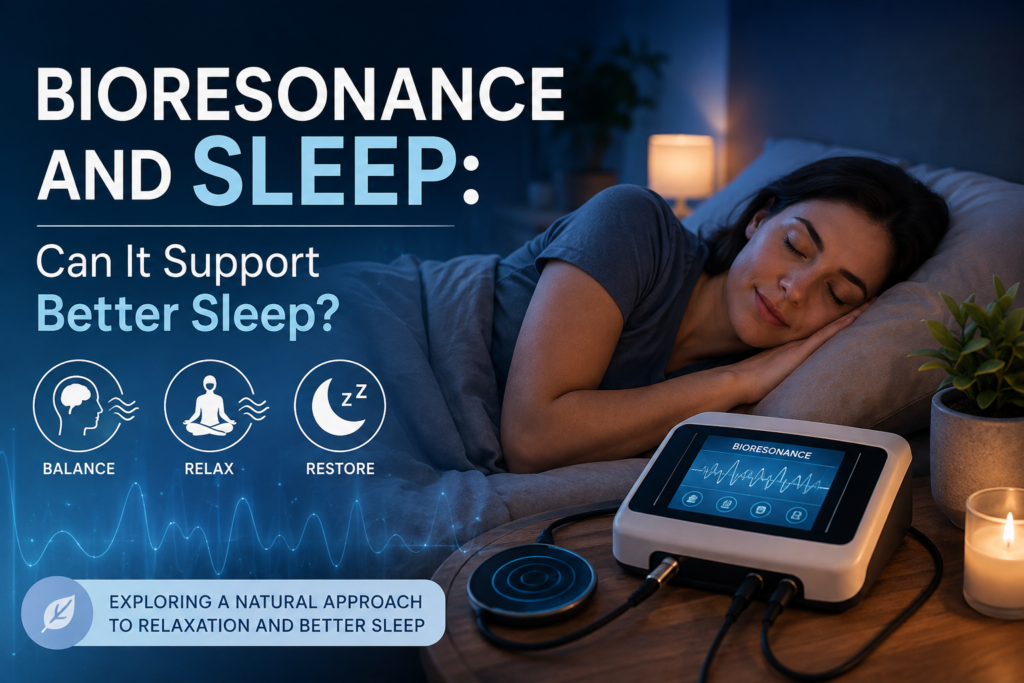
If you struggle to fall asleep, wake frequently during the night, or simply wake up feeling unrefreshed, you may be looking beyond conventional approaches for ways to improve your sleep. This has led some people to explore complementary wellness approaches such as bioresonance.
But what is the connection between bioresonance and sleep, and can a bioresonance session actually help you sleep better?
The honest answer is that the evidence is still limited. Bioresonance is promoted by some practitioners as a complementary approach that may support relaxation and wellbeing, but there is not enough high-quality scientific evidence to say that it is an established treatment for insomnia or other sleep disorders.
This article looks at what bioresonance is, why it is sometimes associated with sleep and relaxation, what the current evidence tells us, and how it can fit—if appropriate—alongside healthy sleep habits and professional care.
What Is Bioresonance?
Bioresonance is a complementary wellness approach based on the idea that the body produces measurable electromagnetic or energetic signals and that these signals can be influenced or assessed using specialized equipment.
Practitioners may describe bioresonance as a non-invasive session designed to identify or work with particular frequency patterns. The exact methods and theories can vary considerably between practitioners and devices.
It is important to distinguish these proposed mechanisms from established medical science. Claims about bioresonance should not automatically be interpreted as proven explanations of how the body or nervous system works.
For people interested in exploring it, bioresonance may be considered a complementary wellness practice, rather than a replacement for evidence-based diagnosis or treatment.
Can Bioresonance Support Better Sleep?
Bioresonance may be used by some people as part of a relaxation-focused wellness routine, but there is currently insufficient evidence to conclude that bioresonance directly improves sleep or treats insomnia.
Any improvement someone experiences may have several possible explanations, including relaxation, changes in routine, expectations, or other lifestyle factors. People with persistent sleep problems should also consider evidence-based approaches and discuss ongoing symptoms with a healthcare professional.
That distinction is important. It allows you to explore complementary approaches without expecting them to provide a guaranteed solution.
Why Are Bioresonance and Sleep Sometimes Connected?
Sleep is influenced by many factors, including stress, daily routines, the sleeping environment, physical health, medications, caffeine and alcohol use, and psychological wellbeing.
When someone is stressed or mentally alert at bedtime, relaxing can become difficult. A calming evening routine may therefore help create conditions that are more suitable for sleep.
Some people who explore bioresonance describe their sessions as relaxing or calming. However, personal experiences are not the same as clinical evidence, and it would be premature to conclude that bioresonance itself causes improvements in sleep.
The potential connection is better understood as bioresonance being explored as part of a broader relaxation and wellness routine, rather than as a proven sleep treatment.
What Does the Evidence Say About Bioresonance for Sleep?
This is where a balanced approach is especially important.
Research into complementary approaches and sleep exists, but evidence for bioresonance specifically is limited. There is not currently a strong body of high-quality clinical research demonstrating that bioresonance consistently improves insomnia, sleep duration, sleep efficiency, or other important sleep outcomes.
Research into related approaches should also not automatically be treated as evidence for bioresonance. For example, studies of biofeedback have investigated whether helping people regulate physiological responses can improve insomnia. A systematic review found conflicting evidence and did not establish consistent improvements across important sleep outcomes.
This means more research would be needed before making strong claims about bioresonance therapy and sleep.
What We Can Say With More Confidence
There is considerably stronger evidence for established behavioral approaches to chronic insomnia.
The American Academy of Sleep Medicine recommends Cognitive Behavioral Therapy for Insomnia (CBT-I) as a first-line treatment for adults with chronic insomnia. CBT-I can include strategies such as stimulus control, sleep restriction, cognitive techniques and relaxation methods.
So, if your main goal is to address persistent insomnia, bioresonance should not be presented as a substitute for treatments with stronger scientific support.
How Stress Can Affect Sleep
Stress and sleep often influence one another.
During periods of stress, your mind may remain active when you want to sleep. You might replay conversations, think about work, worry about tomorrow, or simply find it difficult to switch off.
Poor sleep can then make the following day more difficult, potentially increasing tiredness and frustration.
This is one reason relaxation can be an important part of a healthy sleep routine.
Depending on the individual, relaxation may include:
- Slow breathing exercises
- Gentle stretching
- Meditation or mindfulness
- Reading before bed
- Taking a warm bath or shower
- Reducing stimulating activities at night
- Keeping a consistent bedtime
- Creating a comfortable, quiet bedroom
If someone finds a bioresonance session relaxing, that experience may be useful as part of their personal wellness routine. However, relaxation itself should not be confused with proof that bioresonance treats the underlying cause of insomnia.
Bioresonance vs. Healthy Sleep Habits
It can be helpful to look at bioresonance alongside basic sleep-supporting habits rather than viewing it as a standalone solution.
| Approach | Potential role | Strength of evidence |
|---|---|---|
| Consistent sleep schedule | Supports regular sleep patterns | Strong general support |
| Relaxation techniques | May reduce mental arousal | Supported as part of behavioral approaches |
| CBT-I | Addresses behaviors and thoughts associated with insomnia | Strong evidence |
| Comfortable sleep environment | Can reduce common sleep disruptions | Generally recommended |
| Bioresonance | Complementary wellness/relaxation approach | Evidence for sleep remains limited |
| Medical assessment | Identifies possible underlying sleep or health problems | Important for persistent symptoms |
The key takeaway is that not every approach needs to compete with another. A person can be interested in complementary wellness while still using evidence-based care where appropriate.
Could Bioresonance Be Part of a Relaxation Routine?
For some people, the appeal of bioresonance may be less about finding a “sleep cure” and more about having dedicated time to slow down.
A session may provide an opportunity to step away from work, screens and everyday responsibilities. If someone finds that experience calming, it may contribute to their overall sense of wellbeing.
However, it is difficult to separate the effect of a particular therapy from the broader experience surrounding it.
For example, someone might feel more relaxed because they:
- Took time away from daily stress
- Sat quietly for an extended period
- Focused on their wellbeing
- Expected the session to be calming
- Changed their evening routine
- Became more aware of their sleep habits
These factors are worth considering when evaluating your own experience.
Pros and Cons of Exploring Bioresonance for Sleep
If you are considering bioresonance for sleep, looking at both potential advantages and limitations can help you make a more informed decision.
Potential Pros
- May be experienced as relaxing by some individuals
- Non-invasive sessions may appeal to people interested in complementary wellness
- Can encourage people to pay more attention to stress and relaxation
- May fit alongside a broader healthy lifestyle routine
- Can provide dedicated time away from daily activities
Potential Cons
- Evidence specifically supporting bioresonance for sleep is limited
- It should not be presented as a proven treatment for insomnia
- Results may vary considerably between individuals
- It should not replace professional evaluation of persistent sleep problems
- Claims about diagnosing or correcting medical conditions through bioresonance should be treated cautiously
The biggest consideration is expectations. A complementary therapy can be explored without assuming that it will produce a particular medical outcome.
What Else Can You Do to Improve Sleep?
Whether or not you choose to explore bioresonance, the basics of good sleep remain important.
Keep a Regular Sleep Routine
Try to go to bed and wake up at roughly the same times each day. A consistent schedule can help reinforce your body’s regular sleep-wake pattern.
Create a Calmer Evening
Give yourself time to slow down before bed. Lowering stimulation and creating a predictable bedtime routine may make the transition to sleep easier.
Pay Attention to Caffeine
Caffeine can interfere with sleep for some people, particularly when consumed later in the day. Consider how your caffeine intake affects your own sleep.
Make Your Bedroom Comfortable
A dark, quiet and comfortable environment can help reduce unnecessary interruptions.
Reduce Screen Stimulation
Phones, computers and other devices can keep your attention active late at night. Creating some screen-free time before bed may help you establish a calmer routine.
Address Ongoing Stress
If worries regularly keep you awake, relaxation techniques, structured stress management or professional support may be useful.
For chronic insomnia, evidence-based behavioral treatment such as CBT-I has a much stronger research foundation than bioresonance.
When Should You Speak to a Healthcare Professional?
Occasional difficulty sleeping is common. However, persistent or severe sleep problems deserve attention, particularly when they affect your concentration, mood, work, relationships or everyday activities.
Consider speaking with a qualified healthcare professional if:
- Sleep difficulties continue for an extended period
- You regularly wake feeling exhausted
- You frequently wake during the night
- You have significant daytime sleepiness
- You regularly snore heavily or wake gasping
- You suspect another health problem may be affecting your sleep
- Sleep problems are interfering with your normal life
A healthcare professional can help determine whether there may be an underlying sleep disorder or another issue that needs attention.
Bioresonance should not be used to diagnose or manage a medical condition in place of appropriate healthcare.
A Balanced Approach to Bioresonance and Sleep
There is nothing wrong with being curious about complementary approaches. The important thing is to keep expectations realistic.
If you are interested in bioresonance, you might view it as one component of a wider wellness routine rather than a guaranteed answer to sleep problems.
Combining healthy sleep habits with appropriate professional guidance gives you a more reliable foundation. If you also find certain relaxation practices personally helpful, they can potentially be incorporated into your evening routine.
Frequently Asked Questions
Can Bioresonance Help With Sleep?
There is currently not enough high-quality evidence to conclude that bioresonance directly treats insomnia or reliably improves sleep. Some people may find sessions relaxing, but personal experiences should not be considered proof of a specific therapeutic effect.
Is Bioresonance Therapy Safe for Sleep Problems?
Bioresonance is generally described as a non-invasive complementary approach, but the safety of a particular session depends on the equipment, practitioner and individual circumstances. It should not replace medical assessment when sleep problems are persistent or severe.
How Does Stress Affect Sleep?
Stress can make it harder to relax at bedtime and may contribute to difficulty falling asleep or staying asleep. Relaxation techniques and behavioral approaches can be useful components of a broader sleep strategy.
What Is the Best Treatment for Chronic Insomnia?
For adults with chronic insomnia, Cognitive Behavioral Therapy for Insomnia (CBT-I) is strongly recommended as a first-line treatment by the American Academy of Sleep Medicine.
Can Bioresonance Replace Sleep Medication?
Bioresonance should not be viewed as a replacement for prescribed medication or professional medical care. If you are taking medication for a sleep-related condition, speak with your healthcare professional before making changes.
Can I Use Bioresonance Alongside Healthy Sleep Habits?
Some people may choose to explore bioresonance alongside healthy sleep habits. Keeping a regular sleep schedule, creating a comfortable sleep environment and addressing stress remain important regardless of whether you use complementary therapies.
How Long Does It Take to Improve Sleep?
There is no reliable timeframe that can be promised for bioresonance. Sleep improvements depend on the underlying cause, individual circumstances and the approach being used.
When Should Sleep Problems Be Investigated?
Persistent sleep difficulties, significant daytime sleepiness, loud snoring, breathing interruptions during sleep or major effects on daily life are reasons to discuss your symptoms with a qualified healthcare professional.
Conclusion
The relationship between bioresonance and sleep is an interesting area for people looking at complementary wellness approaches, but the scientific evidence is currently not strong enough to say that bioresonance is an established treatment for insomnia or other sleep disorders.
Some people may find a session relaxing, and relaxation can be a useful part of a healthy bedtime routine. However, it is important to separate personal experiences and proposed mechanisms from scientifically established medical benefits.
If you are dealing with ongoing sleep problems, start with proven sleep-supporting strategies and consider speaking with a qualified healthcare professional. Evidence-based approaches such as CBT-I have substantially stronger support for chronic insomnia.
For those interested in complementary wellness, bioresonance can be considered as part of an overall approach—with realistic expectations and without replacing appropriate medical care. For more visit our facebook page.