Bioresonance therapy has evolved significantly from its early days as a niche alternative practice. Today, advanced bioresonance represents a convergence of quantum physics, biophysics, and cutting-edge medical technology—offering a new paradigm for understanding health, diagnosis, and healing. This blog explores what makes modern bioresonance “advanced” and why it’s gaining attention in integrative medicine circles worldwide.
What Is Bioresonance Therapy?
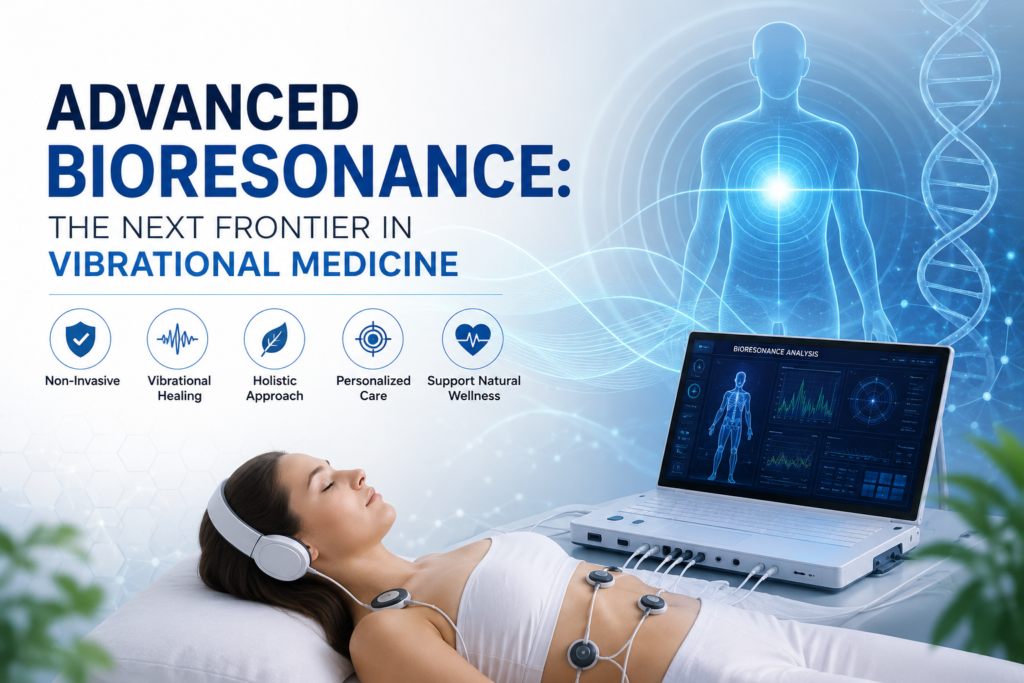
At its core, bioresonance therapy is based on the principle that every cell in the body emits unique electromagnetic waves. Healthy cells produce harmonious frequencies, while unhealthy or stressed cells emit altered, disharmonious wavelengths. Bioresonance devices detect these electromagnetic signals through electrodes placed on the skin, distinguishing between physiological (healthy) and pathological (unhealthy) frequency patterns.
The therapy then works to restore balance. The device processes these signals—either amplifying beneficial frequencies, attenuating harmful ones, or inverting pathological waves to cancel them out—and feeds the corrected information back into the body. The goal is to help the body’s regulatory systems return to homeostasis and activate natural self-healing processes.
What Makes Advanced Bioresonance Different?
- From Simple Frequency Therapy to Quantum-Grade Systems
Traditional bioresonance devices primarily measured and modified basic electromagnetic frequencies. Today’s advanced systems—such as 9D Non-Linear Systems (9D NLS)—use quantum resonance technology to analyze the body’s biofield in multiple dimensions. These systems don’t just detect surface-level frequencies; they identify energetic disturbances at the cellular, tissue, and even organ-system levels.
Modern platforms like the BICOM optima®️ series combine decades of clinical refinement with sophisticated signal processing, offering over 2,000 therapeutic programs tailored to individual patient needs.
- The Theory of Bioresonant Energy Transduction (TEBR)
A major leap forward came with the development of the Theory of Bioresonant Energy Transduction (TEBR) in 2025–2026. This integrative framework bridges traditional medicine with discoveries in quantum physics, biology, and neuroscience. TEBR posits that living organisms are organized systems of internally tuned resonators capable of receiving, transforming, and emitting vibrational information signals—bioelectric, mechanical, electromagnetic, and photonic—across all levels of biological organization.
This framework provides a scientific language for understanding phenomena that conventional biomedical models struggle to explain, placing vibrational information at the heart of health, diagnosis, and prevention.
Emerging Clinical Applications
Advanced bioresonance is being studied across an increasingly wide range of conditions:
Mental Health and Neurology
A 2025 pilot study combining Bio-Resonance Neurotechnology (BRNT) with transcranial magnetic stimulation showed significant reductions in both major depressive disorder and generalized anxiety disorder symptoms. Patients experienced dramatic improvements, with effect sizes 5 to 13 times greater than baseline variability.
Another study found that bioresonance therapy reduced depression severity more effectively than selective serotonin reuptake inhibitor medication in patients with recurrent depressive disorder.
Post-Traumatic Syndrome and Rehabilitation
A prospective randomized clinical trial involving 135 patients with post-traumatic syndrome found that bioresonance therapy—particularly when combined with standard treatment—produced significant improvements in pain reduction, sleep quality, inflammation markers, and immune response. Rehabilitation time was reduced by 49%, and medication costs decreased by up to 31%.
Digestive Health and Chronic Pain
A 2024 pilot study on patients with irritable bowel syndrome and chronic low-back pain found that bioresonance therapy led to significant improvements in both organic and musculoskeletal symptoms.
Autoimmune and Allergic Conditions
Bioresonance has shown particular promise in managing allergies, autoimmune conditions (including those related to Lyme disease), metabolic imbalances, and chronic pain. Treating allergies and related conditions such as eczema and asthma remains one of the most well-studied applications.
The Technology Behind the Treatment
Advanced bioresonance devices like the BICOM system (developed in Germany over 30 years ago) use sophisticated electronics to transform modulated frequency patterns into “Bioresonance Magnetic Frequency patterns”. Some cutting-edge platforms, such as the multiphysics MUFLON‑X device, integrate multiple physical principles to deliver comprehensive therapeutic effects.
In addition to therapy, many advanced systems also function as diagnostic scanners—identifying root causes of energetic imbalances and developing personalized treatment protocols in real time.
The Growing Market and Future Outlook
The quantum bioresonance technology market is estimated at 2.4 billion by 2032, growing at a compound annual rate of 10.5%. This growth reflects increasing consumer interest in non-invasive, holistic approaches to health and wellness.
A Balanced Perspective
It’s important to note that while advanced bioresonance is gaining clinical attention and research support, it remains a complementary modality rather than a replacement for conventional medical care. The scientific community continues to call for larger, sham-controlled, blinded studies to confirm encouraging preliminary results.
However, as the TEBR framework suggests, we may be witnessing the emergence of a new way of understanding health—one that recognizes every organism as a field of communication and healing as the rediscovery of harmony with our vital essence.
Is Advanced Bioresonance Right for You?
Advanced bioresonance may be worth exploring if you’re dealing with:
· Chronic stress, fatigue, or energetic imbalances
· Allergies or autoimmune conditions
· Depression, anxiety, or sleep disorders
· Chronic pain or inflammatory conditions
· Digestive issues or hormonal imbalances
Most patients describe the experience as deeply relaxing—as if the body finally has the opportunity to “switch off” daily stress. While some notice immediate changes, others experience gradual improvements over several sessions.
Interested in learning more about advanced bioresonance and whether it could support your health journey?
Contact our clinic to schedule a consultation.