Bioresonance energy healing is a term that often attracts people interested in holistic wellness, natural therapies, and the relationship between the body’s energy and overall well-being. It is commonly associated with vibrational medicine, a broad concept based on the idea that energy and frequencies may play a role in health.
But what does bioresonance energy healing actually involve? How does it differ from other energy-based therapies, and what does scientific research say about its effectiveness?
In this guide, we explore the principles behind bioresonance, its proposed uses, the current scientific evidence, and what to consider before trying this complementary approach.
What Is Bioresonance Energy Healing?
Bioresonance energy healing is a complementary therapy based on the theory that the body produces electromagnetic signals and that changes in these signals may be associated with physical conditions.
Practitioners use specialised electronic devices that are claimed to detect or work with these signals. According to the theory behind bioresonance, the devices may identify unusual frequencies and attempt to modify them to support the body’s natural balance.
However, these proposed mechanisms have not been established by reliable scientific evidence. Bioresonance should therefore be understood as a complementary wellness approach rather than a proven medical treatment.
Understanding the Concept of Vibrational Medicine
Vibrational medicine is an umbrella term used for approaches that suggest energy or frequency patterns influence health. It can include different practices, from energy-based therapies to certain forms of electromagnetic treatment.
The underlying ideas vary considerably between approaches. Some involve measurable physical signals, while others refer to subtle energy fields that have not been scientifically established.
Bioresonance belongs to this broader conversation because its practitioners propose that the body’s electromagnetic signals can provide information about health.
It is important to distinguish these theories from established medical technologies. For example, electrocardiograms measure electrical activity in the heart, but this does not establish that bioresonance devices can diagnose illnesses or restore health by changing supposed abnormal frequencies.
How Does Bioresonance Therapy Work?
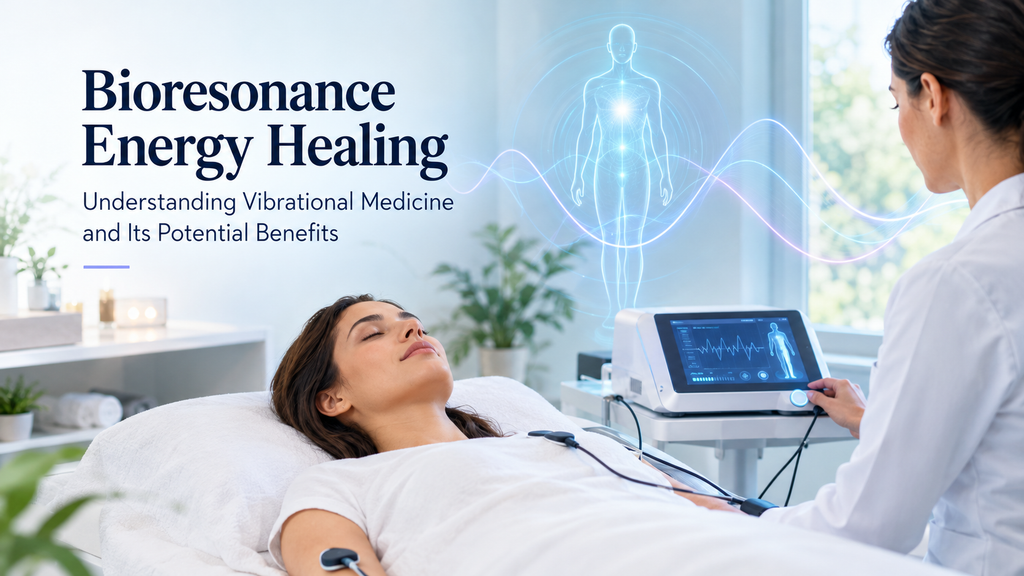
A typical bioresonance session begins with a discussion about the client’s wellness goals and relevant health history. The practitioner may then use a device connected to electrodes, hand-held sensors, or other components, depending on the equipment.
The device is used according to the practitioner’s chosen protocol. Some practitioners describe the process as assessing the body’s signals, while others claim that the equipment can deliver modified frequencies.
What Happens During a Session?
Although procedures differ between clinics, a session may include:
- Initial consultation: The practitioner discusses your concerns, health history, and expectations.
- Device-based assessment: Sensors or electrodes are used as part of the practitioner’s assessment process.
- Bioresonance session: The device is operated according to the practitioner’s selected settings and protocol.
- Discussion and follow-up: The practitioner reviews the session and discusses any next steps.
These steps describe how some practitioners conduct sessions; they do not establish that the equipment can reliably identify disease or correct biological imbalances.
A bioresonance assessment should not replace appropriate medical examinations, laboratory testing, or advice from a qualified healthcare professional.
Potential Benefits of Bioresonance Energy Healing
People explore bioresonance for different reasons, including curiosity about holistic wellness, an interest in complementary therapies, or a desire to take a more active role in their well-being.
Practitioners may promote bioresonance for several purposes, but advertised uses should not be confused with demonstrated clinical benefits.
| Area of interest | What practitioners may claim | What the evidence shows |
|---|---|---|
| General wellness | Supporting overall balance | Specific benefits have not been established reliably |
| Stress and relaxation | Encouraging a sense of calm | Relaxation may be valuable, but bioresonance-specific effects remain uncertain |
| Allergies | Identifying or addressing sensitivities | Research does not support reliable allergy diagnosis using bioresonance |
| Skin conditions | Supporting skin health | Clinical evidence has not established effectiveness for conditions such as eczema |
| Chronic health concerns | Supporting the body’s natural processes | It has not been established as an effective treatment for chronic diseases |
The Memorial Sloan Kettering Cancer Center’s review of bioresonance notes that evidence does not support its promoted diagnostic and treatment claims, including its use for allergies and eczema. Source.
Can Bioresonance Help With Relaxation?
Some people value complementary wellness sessions because they provide time away from daily responsibilities and an opportunity to discuss their concerns in a calm environment.
However, feeling relaxed after a session is not proof that a device has corrected an energy imbalance or treated an underlying medical condition.
Anyone interested in stress management can also consider approaches with a stronger evidence base, including mindfulness practices, appropriate physical activity, and professional support when needed.
What Does Science Say About Bioresonance?
Scientific evidence is an essential part of understanding any health-related therapy.
At present, there is insufficient reliable evidence to establish that bioresonance can diagnose or treat disease through the detection and correction of abnormal body frequencies.
For example, clinical evidence reviewed by Memorial Sloan Kettering Cancer Center indicates that bioresonance and electrodermal testing have not demonstrated reliable results for diagnosing allergies. Research on bioresonance for childhood eczema has also failed to establish effectiveness.
This does not mean that every possible application of electromagnetic technology is ineffective. Modern medicine uses electromagnetic principles in established technologies, including diagnostic imaging and certain treatments. However, evidence supporting one technology cannot automatically be applied to a different device or therapy.
Is Bioresonance the Same as Energy Healing?
Not exactly. The terms are sometimes used interchangeably in wellness discussions, but they can describe different practices.
Bioresonance typically involves electronic equipment and claims about electromagnetic signals. Other energy-healing approaches, such as Reiki, generally involve a practitioner placing their hands on or near a person, or working with a proposed energy field.
The US National Center for Complementary and Integrative Health states that Reiki has not been clearly shown to be effective for health-related purposes and that scientific evidence does not support the existence of its proposed therapeutic energy field.
Although these practices differ, an important principle applies to both: claims about health benefits need to be evaluated using evidence specific to the therapy being offered.
Is Bioresonance Energy Healing Safe?
Safety depends on the equipment used, the practitioner’s practices, and whether the therapy interferes with appropriate medical care.
Before considering a session, keep the following points in mind:
- Ask what the procedure involves and what the equipment is intended to do.
- Request clear information about the evidence supporting the specific claims being made.
- Discuss complementary therapies with your healthcare professional, particularly if you have an ongoing medical condition.
- Do not stop prescribed medication or delay recommended investigations or treatment.
- Be cautious of anyone promising to cure serious diseases or diagnose multiple conditions without appropriate medical testing.
Bioresonance should not be used as a substitute for evidence-based medical care, particularly for conditions that require timely diagnosis or treatment.
Who Might Be Interested in Bioresonance?
Bioresonance may attract people who are exploring complementary wellness approaches and want to understand different perspectives on the relationship between the body and energy.
If you are considering it, make your decision based on transparent information rather than promises of guaranteed results.
A responsible practitioner should explain the limitations of the approach, avoid unsupported medical claims, respect your existing healthcare decisions, and encourage appropriate medical assessment whenever necessary.
Frequently Asked Questions About Bioresonance Energy Healing
What is bioresonance energy healing used for?
Practitioners promote bioresonance for various wellness concerns, including allergies, skin conditions, and general well-being. However, reliable scientific evidence has not established that it can effectively diagnose or treat these conditions.
Is bioresonance a form of vibrational medicine?
Yes, bioresonance is commonly discussed within the broader category of vibrational medicine. This category includes approaches based on theories about energy and frequency, but the scientific support varies between practices and specific applications.
Does bioresonance energy healing really work?
There is currently insufficient reliable evidence to conclude that bioresonance can diagnose or treat medical conditions through frequency correction. More rigorous research would be needed to establish its effectiveness for specific uses.
Can bioresonance replace conventional medical treatment?
No. Bioresonance should not replace medical diagnosis, prescribed medication, or evidence-based treatment. Always consult a qualified healthcare professional about symptoms or medical concerns.
Is bioresonance the same as Reiki?
No. Bioresonance generally uses electronic devices and is based on proposed electromagnetic signals, whereas Reiki is an energy-based practice involving a practitioner working with a proposed energy field. Neither should be assumed to provide proven medical benefits.
Final Thoughts
Bioresonance energy healing sits at the intersection of holistic wellness and theories about the role of energy and frequency in the human body. Understanding these ideas can help people make informed decisions about complementary therapies.
Although bioresonance is promoted for several health-related purposes, its proposed mechanisms and clinical benefits have not been established by reliable scientific evidence. An open-minded approach should therefore be balanced with critical thinking, transparent information, and respect for evidence-based healthcare.
If you are exploring bioresonance, focus on understanding what the therapy involves, what is known about its limitations, and how it fits alongside appropriate medical care. Informed decisions are a more reliable foundation for well-being than promises that any single therapy can restore health or treat disease.for more visit our facebook and instagram page.