
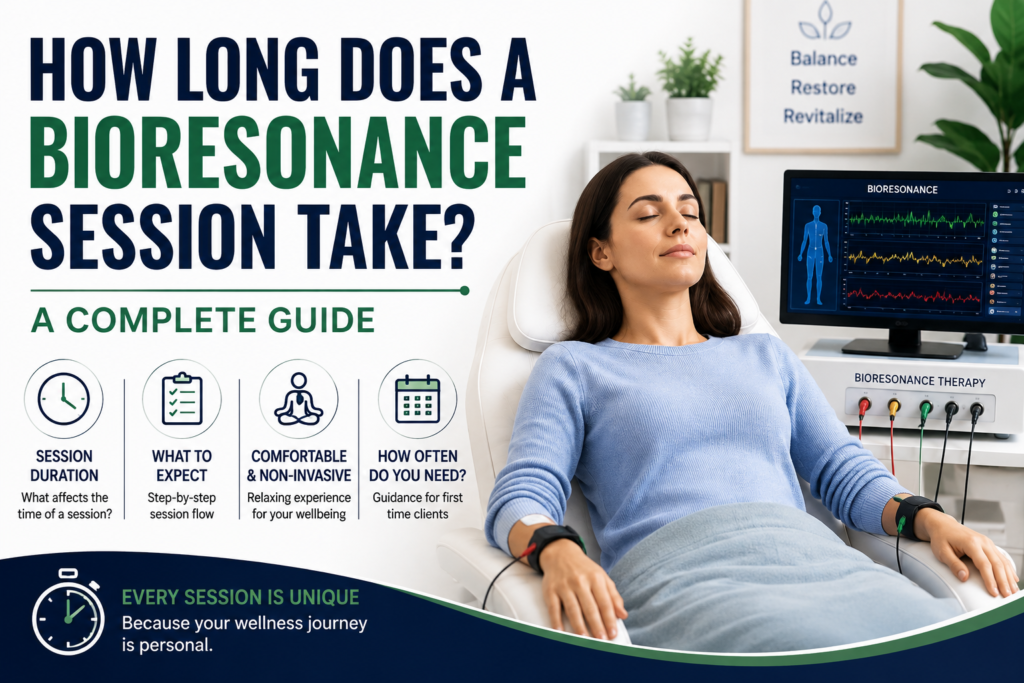
If you are considering bioresonance therapy for the first time, one of the most common questions is: How long does a bioresonance session take?
The answer can vary depending on the practitioner, equipment and type of session. A first appointment may also take longer than a follow-up session because it can include an initial consultation and an explanation of the process.
In this guide, we explain how long a typical bioresonance session may take, what can affect the duration, how to prepare and what you can expect before and after your appointment.
How Long Does a Bioresonance Session Take?
There is no universal time limit for a bioresonance therapy session. The duration depends on the type of appointment and the approach used by the practitioner.
A session may include several stages, such as:
- Initial consultation
- Explanation of the equipment
- Bioresonance assessment
- Discussion of the information collected
- Questions and recommendations
For this reason, it is useful to ask the practitioner about the expected appointment length when booking.
How Long Is a First Bioresonance Session?
Your first bioresonance session may take longer than future appointments.
This is because your practitioner may need additional time to understand your goals, explain how the equipment works and answer your questions.
Rather than focusing only on the assessment itself, consider the entire appointment when planning your schedule.
If you are booking for the first time, ask:
“How much time should I allow for my first bioresonance appointment?”
This will give you a more accurate idea of what to expect.
What Happens During a Bioresonance Session?
Understanding the different stages of an appointment can help explain why session times can vary.
1. Initial Consultation
The appointment may begin with a conversation between you and your practitioner.
You may be asked about your general wellbeing, lifestyle and what you hope to explore through the session.
This is also a good opportunity to explain any concerns you have and ask questions about the process.
If you are receiving medical treatment or taking prescribed medication, make sure your practitioner is aware of this.
2. Equipment Setup
The next step may involve setting up the bioresonance equipment.
Depending on the system being used, the practitioner may use sensors, electrodes, headphones, hand contacts, foot contacts or other components.
The exact setup varies between practitioners and devices.
Your practitioner should explain what is being used and how the session will work before beginning.
3. Bioresonance Assessment
The main part of the appointment may involve the practitioner operating the bioresonance equipment and collecting or working with the information generated by the system.
The length of this stage can vary.
Some sessions may be relatively short, while others may involve a more detailed process.
It is important to understand that bioresonance systems and protocols are not standardised in the same way as conventional medical diagnostic tests.
4. Discussion After the Session
Your appointment may finish with a conversation about the session.
Your practitioner may explain their observations or discuss general wellness information.
This part of the appointment is useful because it gives you an opportunity to ask questions and understand what was discussed.
Why Do Bioresonance Session Times Vary?
Several factors can influence how long a bioresonance session takes.
Type of Appointment
A first appointment may take longer than a follow-up appointment because it can include additional consultation and explanations.
Equipment Used
Different bioresonance systems may use different procedures and equipment. This can affect the amount of time required.
Individual Practitioner
Every practitioner may structure their appointments differently.
Some may spend more time on consultation and discussion, while others may have a shorter appointment format.
Your Questions and Goals
If you have several questions or want a detailed explanation of the process, your appointment may take longer.
Taking a few extra minutes to understand the session can be worthwhile.
How Should You Prepare for a Bioresonance Session?
Preparing for your appointment does not necessarily need to be complicated.
Your practitioner should tell you if there are specific instructions before your session.
In general, you can:
- Wear comfortable clothing
- Arrive a few minutes early
- Bring any information requested by the practitioner
- Write down questions you want to ask
- Tell the practitioner about relevant current treatments or medications
If you are unsure whether you need to do anything before your appointment, contact the clinic beforehand.
What Should You Wear to a Bioresonance Session?
Comfortable clothing is usually a practical choice for a wellness appointment.
Depending on the equipment and assessment method, your practitioner may provide specific instructions regarding clothing, footwear or accessories.
If you have any concerns, ask the clinic before your appointment.
Is a Longer Bioresonance Session Better?
Not necessarily.
The length of a session does not automatically determine its quality.
A good appointment should provide enough time for the practitioner to explain the process, carry out the session appropriately and answer your questions.
Instead of choosing a practitioner simply because they offer longer appointments, consider their transparency, communication and approach.
Be cautious of anyone promising guaranteed health results simply because you book longer or more frequent sessions.
How Often Should You Have Bioresonance Sessions?
There is no single schedule that applies to everyone.
The frequency of appointments may depend on the type of service being offered, the practitioner’s approach and your personal preferences.
If a practitioner recommends multiple sessions, ask them to explain why they believe follow-up appointments are appropriate.
You should also be comfortable making your own informed decision.
Most importantly, bioresonance should not be used as a reason to delay necessary medical care or stop prescribed treatment.
What Can You Expect After a Bioresonance Session?
After your appointment, your practitioner may discuss the information generated during the session and answer your questions.
You may want to ask:
- What did the session involve?
- What does the information mean?
- Is this information medically diagnostic?
- Are there any limitations I should understand?
- What happens during a follow-up session?
Understanding the difference between complementary wellness information and medical diagnosis is important.
If you have symptoms that concern you, speak with an appropriately qualified healthcare professional.
Bioresonance Therapy and Medical Care
Bioresonance is generally offered as a complementary approach rather than a replacement for conventional healthcare.
This distinction is important when considering the information provided during a session.
The UK Advertising Standards Authority has stated that robust evidence is required for objective claims that bioresonance can diagnose or treat medical conditions. Therefore, consumers should be cautious about practitioners or advertisements making broad medical claims about bioresonance.
If you have an existing health condition, persistent symptoms or concerns about your health, seek appropriate medical advice.
Do not stop prescribed medication or treatment because of information received during a complementary therapy session.
Questions to Ask Before Booking a Bioresonance Session
Before booking an appointment, asking a few simple questions can help you understand exactly what you are paying for.
Consider asking:
How long is the appointment?
Find out the expected total appointment time.
Is the first session longer?
Some practitioners allow additional time for an initial consultation.
What happens during the session?
Ask the practitioner to explain the process clearly.
What equipment is used?
Understanding the equipment can help you know what to expect.
What happens afterwards?
Ask whether there will be time to discuss the session and ask questions.
Are there any preparation instructions?
Find out whether you need to do anything before arriving.
Choosing the Right Bioresonance Practitioner
The quality of your experience can depend greatly on the practitioner you choose.
Look for a practitioner who:
- Clearly explains the session
- Is transparent about the service
- Answers your questions
- Avoids unrealistic promises
- Respects conventional healthcare
- Does not encourage you to stop necessary medical treatment
- Gives you enough information to make an informed decision
A professional approach should focus on clear communication and realistic expectations.
Frequently Asked Questions
How long does a bioresonance session take?
The duration varies depending on the practitioner, equipment and type of appointment. A first appointment may take longer because it can include an initial consultation and explanation of the process.
Is the first bioresonance session longer?
It can be. First appointments may include additional time for discussing your goals, explaining the equipment and answering questions.
How long does a bioresonance assessment take?
The assessment time varies between equipment and practitioners. Ask your practitioner for the expected duration before booking.
Can a bioresonance session be completed quickly?
Some appointments may be relatively short, while others may take longer depending on the procedure. The total time should include any consultation and discussion before and after the assessment.
How often should I have bioresonance sessions?
There is no universal schedule. Follow-up appointments depend on the service offered and your individual circumstances. Ask your practitioner to explain the reasoning behind any recommended schedule.
Do I need to prepare before a bioresonance session?
Preparation varies. Your practitioner should provide any specific instructions before your appointment. Comfortable clothing and arriving a few minutes early can make the experience easier.
Final Thoughts
So, how long does a bioresonance session take? There is no single answer because appointment times vary between practitioners, equipment and session types.
Your first appointment may take longer because it can include a consultation, equipment explanation, assessment and discussion afterwards.
When booking, ask your practitioner about the total appointment duration rather than only the time spent using the equipment. This will help you plan your day and know what to expect.
Most importantly, choose a practitioner who provides clear information, avoids exaggerated claims and respects conventional medical care.
Bioresonance can be explored as a complementary wellness approach, but it should not replace appropriate medical diagnosis or treatment. If you have a health concern or ongoing symptoms, consult a qualified healthcare professional.